


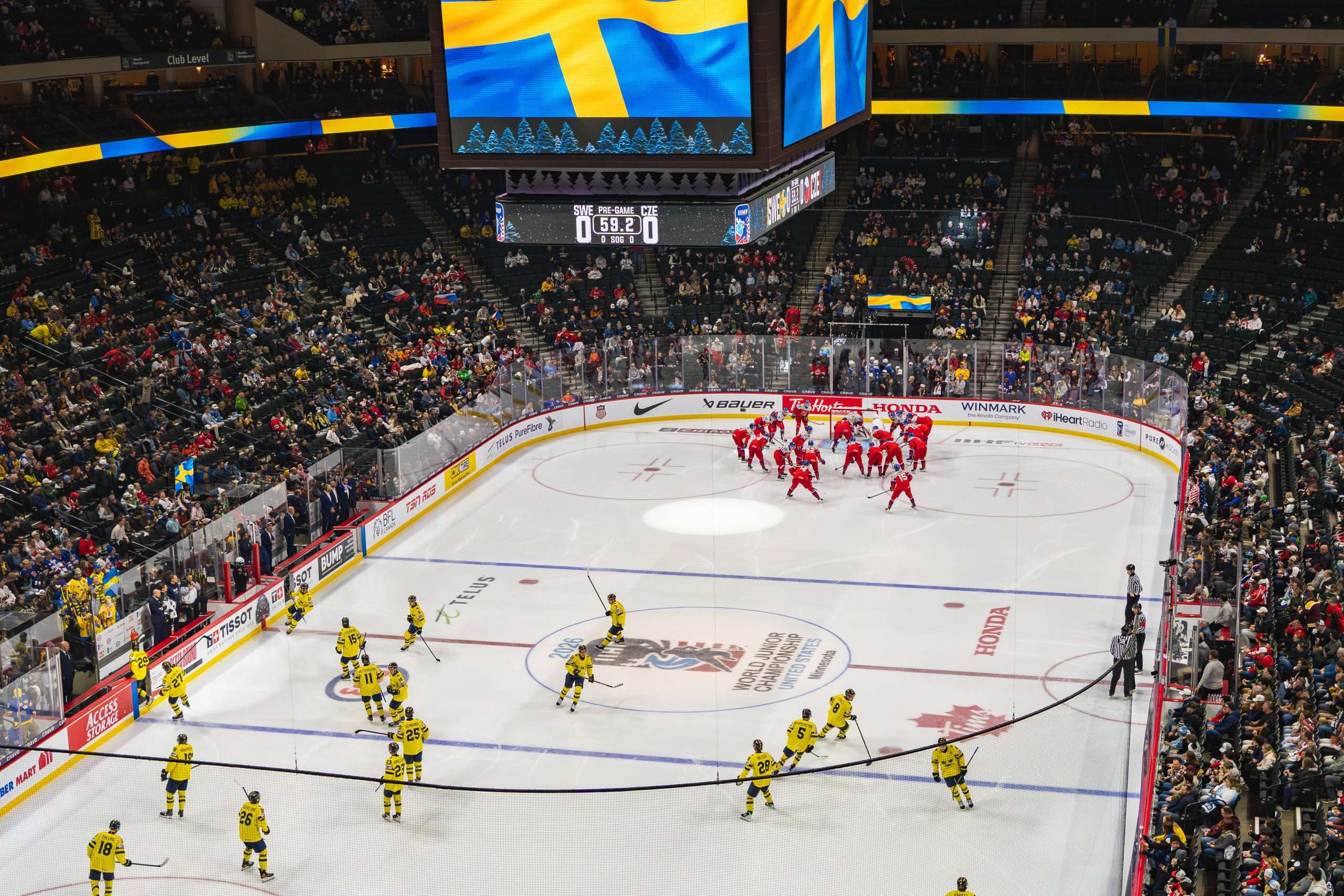
 Announced attendance for the Gold Medal game was 9,753. Many criticized the attendance throughout the tournament, but many factors played into it, and attendance wasn’t really that bad when compared to the past 10 years. Had Team USA advanced to the semis and finals attendance likely would have eclipsed 200,000. LPH PHOTO BY ROBERT BRENT
Many factors played role in a busy hockey climate
by Bryan Zollman, Let’s Play Hockey
The State of Hockey has taken some criticism online for the lack of support for non-USA played hockey games during the World Junior Championship held in St. Paul and Minneapolis.
Sunday night’s semifinal games drew an announced attendance of over 7,000, but the number of people who actually showed up to watch inside the arena seemed far less.
Regardless, the attendance, whether 7,000 or 3,000, was not up to par to some who criticized Minnesota fans for not showing up when their team wasn’t playing.
But Minnesotans shot back with many reasons, most notably a busy schedule running their own kids around to hockey games and tournaments as well as high ticket prices.
Photos circulated of a near empty stadium for some of the games, but it must be taken into consideration that games were being held in a 19,000-seat NHL arena and a 10,000-seat NCAA arena.
Plus, do social media warriors pretending to be hockey purists really believe Minnesotans are going to spend a pile of money and fill a 10,000-seat arena for a Germany vs. Slovakia game when they can go watch Moorhead play St. Thomas Academy in Prior Lake for $8?
To understand Minnesota’s passion for hockey, one must live here.
That’s taking nothing away from the talent of Slovakia or Germany or any other team at the World Juniors. The World Junior Championship is a great display of hockey and showcases the very best 18-20 year-olds in the world. But that still doesn’t trump local hockey in a state that was built on a community-based model where loyalty is local. If little Joey has a game or a practice, you can bet Joey’s mom and dad and little brother are at the local rink watching Joey do power turns over watching Gavin McKenna toe drag past a Latvian defenseman.
That said, Joey and his parents and little brother probably did take in a game or two, but not 12. You can’t expect every game to be filled even close to capacity during the holidays and youth hockey season, and you can’t expect families who already dole out a ton of cash for hockey to spend hundreds of dollars watching players they typically don’t know unless they are on a local college roster.

There is also the television factor. It’s sort of a Catch-22. Those who have NHL Network get great coverage of all the games, and let’s face it, if you’re a sports fan you probably have a 60-inch TV. It’s not like this is 1980 and hockey fans are listening to miracles happen on scratchy radios and fuzzy tvs. Those who don’t have the NHL Network probably aren’t big enough hockey fans to spend the money it cost to attend a game. Junior hockey is a different animal and built more on the Canadian-model. To know the world’s best 18-20 year olds one would have to be somewhat of a rabid hockey fan who has a pair of fuzzy skates hanging from their rearview mirror and a poster of Dean Youngblood on their wall.
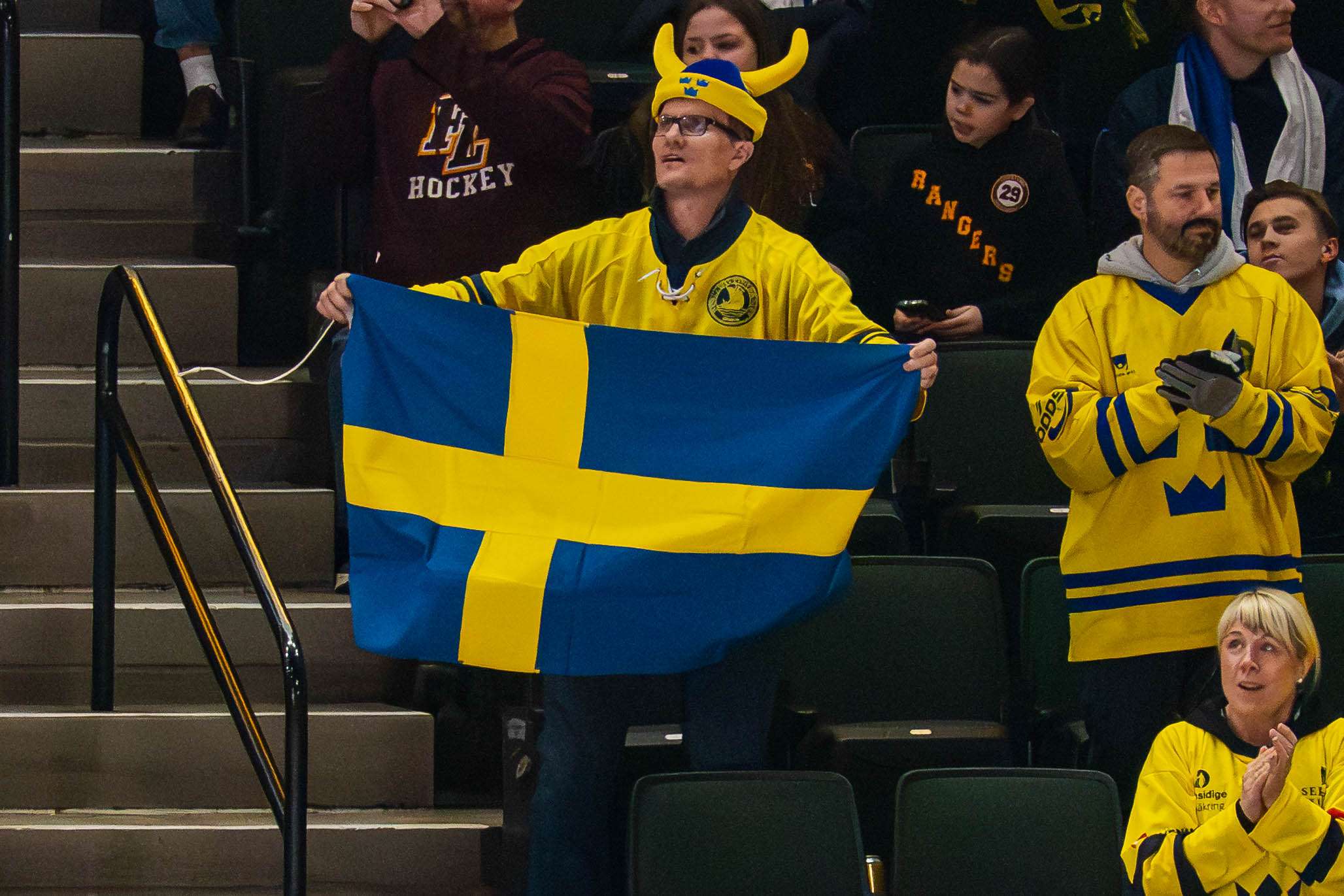
Minnesota is the State of Hockey, but it isn’t the state of junior hockey. This state roots for the Minnesota Wild (consistently drawing 18,000-plus per game), one of the many college teams dotted throughout the state, their high school teams and their youth associations. While there are junior teams splashed around the state, the community-based/play through high-school approach has always been given priority. Pro, college, high school and youth hockey have always ruled here, and those teams create competition when it comes to international play.
There was also a lot of online discussion of travel. A lot of Canadians shouted their disdain for America because of the current administration. Apparently President Trump can even be blamed for low attendance at a hockey tournament in Minnesota. It’s hard to know if these comments came from people who would usually travel to the tournament, or were just internet trolls taking political potshots. It was likely the latter.
With all that said, attendance perhaps wasn’t as bad as people were making it out to be. According to the IIHF, attendance for the tournament this year was 184,708, averaging 6,369 per game. Obviously, Team USA games, which averaged close to 14,000 per game, helped sway the average, but that typically happens in any and every market when the home team hits the ice.

World Juniors Attendance 2017-2026
| Year | Host | Attendance | Per Game | Winner | Runner Up | |
| 2026 | MPLS/St. Paul | 184,708 | 6,369 | Sweden | Czechia | |
| 2025 | Ottawa | 296,894 | 10,238 | USA | Finland | |
| 2024 | Sweden | 170,673 | 5,885 | USA | Sweden | |
| 2023 | Halfax | 221,904 | 7,397 | Canada | Czechia | |
| 2022 | Edmonton | 55,686 | 1,989 | Canada | Finland | |
| 2021 | Edmonton | COVID | COVID | USA | Canada | |
| 2020 | Czech Republic | 173,474 | 5,596 | Canada | Russian | |
| 2019 | Vancouver | 304,393 | 10,146 | Finland | USA | |
| 2018 | Buffalo | 211,210 | 7,040 | Canada | Sweden | |
| 2017 | Montreal | 257,882 | 8,596 | USA | Canada | |
| **in 2022 the tournament was held in Mid August. | ||||||
Last year the tournament was held in Ottawa and drew 296,984 fans. And yes, Canada is just a different animal when it comes to international and junior hockey, because that has always been the foundation of their game. In Canada every 6-year-old who puts on a pair of skates wants to play major junior hockey much like every kid in Minnesota wants to play high school hockey, play in the state tournament and then play in college.
We are not the same in that regard.
Minnesota did outdraw Sweden from two years ago and ranked sixth in the past 10 years in total attendance, which includes a COVID-19 year in 2021 and a tournament in Edmonton in 2022 that was held in mid-August. Sweden drew 170,673 fans, an average of 5,885 per game and in 2020, before COVID-19 reared its ugly head, Czech Republic drew 173,474 fans, or 5,596 per game.
To their credit, Canada has been the best host when it comes to selling tickets. In 2023 in Halifax they drew 221,904, averaging 7,397 per game. In 2017 in Montreal they drew 257,882 (8,596/game), and in 2019 sold a whopping 304,393 tickets in Vancouver, averaging 10,146 fans per game.
In 2018, Buffalo drew 211,210 fans and 7,040 per game. Location may have played a role in the uptick considering Toronto is less than a two-hour drive, Ottawa is five hours away and Montreal six. Those drives to St Paul would be 13, 17 and 18 hours, respectively. Winnipeg is the closest large Canadian hockey city to St. Paul/Minneapolis, about a 7-hour drive. Thunder Bay is close to six.

There probably is some credence on travel burdens which may have kept some people home.
Also, in Buffalo, Team USA won the Gold Medal, meaning they helped fill the stands in the semifinals and finals, which didn’t happen this season due to Team USA’s early exit. Small crowds during Sunday night’s semifinals likely kept Minnesota from reaching the 200,000 mark.
So, when all laid out, one can see that attendance wasn’t as bad as people have made it out to be, and Minnesota did just fine. For those who question our loyalty, we still are and always will be the State of Hockey.
If you don’t believe us, head to Grand Casino Arena in early March when the Minnesota Boys State High School Hockey Tournament takes place.
That’s if you can get a ticket.
